Throughout our careers, we seem to find groups of people who are always optimistic and other groups of people who are constantly negative. One group will tell you that things are fantastic while you are watching the business flounder around you. The other group will tell you that the sky is falling; all while things seems to be doing relatively well. It is enough to make you question your own reality, because often they both seem to be right.
Not surprisingly, it is human nature to side with the optimistic group and dismiss the negative group. Most people don’t like to be negative and we are taught from an early age that with confidence, you can accomplish anything. Henry Ford made the famous quote, “Whether you think you can, or whether you think you can’t, you’re right.” So, isn’t it best to stay positive and believe that everything will work out?
I believe we spend too much time focusing on the wrong question. While negative thinking will certainly get you nowhere, blind optimism will do the same. Companies need employees with positive attitudes, but we also need employees who have the backbone to raise their hands and show that the “emperor has no clothes”. Otherwise, how will we address our threats and weaknesses?

The question is not whether the glass is half-empty or half-full, the question is whether the glass will quench your thirst. The glass may be half-full, but if it is filled with sand, then someone needs to explain that there is a problem. We can’t be blinded by the partial success of having a half full glass. This sets the bar too low.
Sometimes it is difficult and painful to listen to negative feedback, but this is the only way that companies succeed. We need to be focused on the goal, and be willing to listen to our colleagues when they offer guidance and suggestions. Blind optimism and a sense that we are the smartest ones in the room becomes a recipe for failure. Collaboration and a willingness to listen to the constructive feedback is one of the cornerstones of successful companies. Good managers are not threatened by feedback, they welcome it.
As you interact with your colleagues, don’t measure them by whether they are positive or negative. Value their input either way and question whether they are focused on the end goal. If the feedback is constructive and driving the company toward greater success, then it is worth listening to.
Now I am thirsty, I need to go fill my glass…


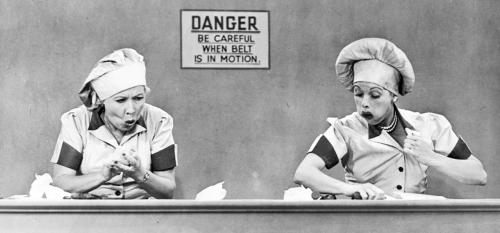
 This past week, I got into a discussion with a colleague about the differences between collaborative and dictatorial management styles. I have had managers who were at both ends of the spectrum and also some who were in the middle. I once worked for a CEO who’s favorite line was, “Everyone has the right to their own opinion, no matter how wrong it might be. Now go do what I asked you to do.” While it made everyone laugh, he clearly wasn’t interested in anyone’s input. He simply wanted to direct and have blind followers. There are certainly case studies where this has worked well. However, brilliant managers who have all the answers are few and far between. Additionally, building a company of “lemmings” who are not allowed to have vision or any form of opinion isn’t the recipe for a successful business.
 When I was in high school, there was a popular song by Jackson Browne called “The Pretender”. In it, he spoke of being “caught between the longing for love, and the struggle for the legal tender”. This week, while traveling on business, I was reminded of the song as I spoke to a middle-aged woman sitting next to me on a flight between Dallas and Austin. She explained that she was in pharmaceutical sales. She was very successful, but as she put it, “had sold her soul” over the past 20-years of her career. She was now between jobs and trying to “heal herself” since she was financially secure, but emotionally bankrupt.
 Most companies are continually managing the lifecycles of their key products. Marketing teams are researching industry trends, looking for new opportunities. Engineering departments are developing new products to satisfy market requirements. Product teams are sustaining existing products by introducing incremental enhancements. Finally, older products are being removed from the market to make room for newer models. The cycle never ends.
 I have been lucky enough to know, and work with, a lot of “successful” business people in my career. I was able to meet and work with the founders of Network Appliance (NetApp) when they were just a small startup in San Jose, CA. I worked for a company who had Ray Noorda (the founder of Novell) as the chairman of the board and was able to interface with him many times. I worked with many dot-com startups who made millions “overnight”. I also worked with many other successful business people who never had home runs, but were able to string together a series of singles, doubles and triples and do just as well as the dot-com overnight successes.
 I noticed something very interesting this Christmas holiday. Many of my neighbors were putting up their own Christmas lights. This was a big change for our street. When we first moved into the neighborhood over ten years ago, everyone put up their own lights. But fairly quickly advertisements arrived offering inexpensive services to install and remove the Christmas lights. No one enjoyed getting up on the roof, and the economy was good, so most families started using local vendors to put them up. However, this year more people were out decorating as a family. It is something I am noticing a lot more of lately. Less people are using vendors and tradesmen, and more people are learning to do things themselves.
 Sizzle vs. Substance – it is a classic marketing debate. When putting together a marketing campaign, what is the right balance of sizzle vs. substance? This issue also translates into press releases, trade show strategies, advertising, internal business presentations, speeches, resumes and almost any form of communication. The obvious answer is that it depends on the message itself and the vehicle used to communicate the message.
 I opened my eyes this morning wide enough to see 5:45am on the alarm clock. It was warm in my bed and it was cold outside. People shouldn’t get up at 5:45am on a Saturday morning. I could think of a thousand reasons to stay in bed and I could only think of one to get out of bed – to get on the road and ride my bike. However, it was still dark outside, and it was very comfortable next to my wife under the covers.


 kevinliebl.com - Insights on Leadership